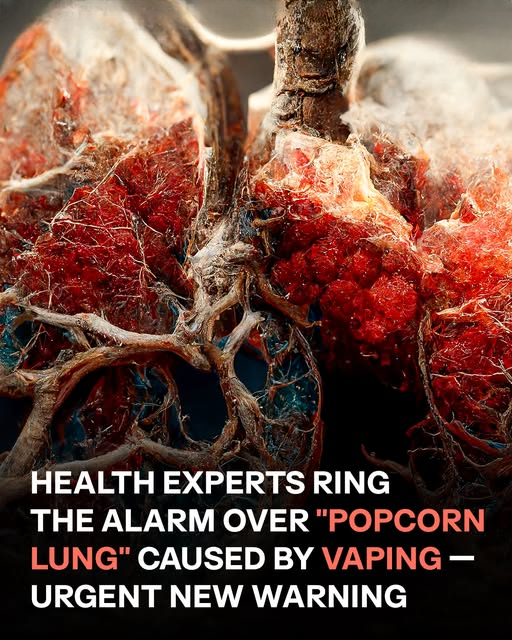
A growing number of young people are facing a serious and irreversible lung condition known as “popcorn lung,” and doctors are raising urgent concerns about the role of vaping in this alarming trend.
Officially called bronchiolitis obliterans , this rare but devastating disease scars the lungs and causes chronic breathing problems. Its nickname comes from its discovery in microwave popcorn factory workers who inhaled diacetyl—a chemical used to create a buttery flavor.
Now, experts warn that the same toxic effects are showing up in teens and young adults who vape, many of whom were drawn in by sweet, candy-like flavors and sleek devices like Juul pens.
The Hidden Chemical Threat in Vape Flavors
Diacetyl is just one of the dangerous substances found in many flavored vape liquids. While it’s safe to consume in food, inhaling it—especially when heated—can cause severe damage to the smallest airways in the lungs.
When these chemicals enter the respiratory system, they trigger inflammation and scarring, leading to symptoms like:
- Persistent dry cough
- Shortness of breath
- Wheezing
- Fatigue
- Difficulty exercising or performing daily tasks
And once the damage is done, it’s permanent. There’s no cure for popcorn lung—only treatments that help manage symptoms.
In recent years, a U.S. teenager made headlines after being diagnosed with popcorn lung following three years of secret vaping. His case was a wake-up call: what may seem like harmless fun could be silently destroying young lungs.
Vaping’s Sweet Trap – A Gateway to Harm
The rise in youth vaping has been fueled by an explosion of enticing flavors—bubblegum, cotton candy, mango ice, and more. These products, often marketed with colorful packaging and social media influencers, have become wildly popular among teens.
But behind the sweet clouds of vapor lies a troubling reality.
While many of the flavoring chemicals used in e-liquids are approved for consumption, they were never meant to be inhaled. Unlike digestion, where the liver filters out toxins, inhaling sends these compounds straight into the lungs—and then into the bloodstream.
Other harmful chemicals found in vape aerosols include:
- Acetaldehyde
- Formaldehyde
- Ammonia
- Sulfur dioxide
- Hydrochloric acid
- Metal oxide fumes
Even so-called “safe” alternatives like acetoin and 2,3-pentanedione—often used in place of diacetyl—may carry similar risks when heated and inhaled.
Experts stress that over 180 different flavoring agents are used in vape products, many of which break down into unknown, unstudied chemicals when heated. The result? An unpredictable and potentially deadly cocktail with every puff.
Why Popcorn Lung Is on the Rise
Popcorn lung isn’t new. It first gained attention in the early 2000s when factory workers producing artificial butter flavoring developed severe lung damage. After public outcry, diacetyl was banned in e-cigarettes in the UK and EU—but remains legal in many parts of the U.S., especially in illicit or unregulated products.
Teenagers are particularly vulnerable. According to data from 2024, e-cigarettes remain the most commonly used tobacco product among American high school students.
What’s worse? Many are engaging in dual use —vaping and smoking traditional cigarettes or cigars—which multiplies the risk.
Studies show that regular vaping increases the likelihood of developing respiratory symptoms—even in otherwise healthy teens. The more someone vapes, and the more complex the flavorings, the higher the risk.
Beyond Vaping – Other Causes of Popcorn Lung
While vaping is a major concern today, popcorn lung can also be caused by:
- Viral infections (like RSV or pneumonia)
- Autoimmune diseases (such as rheumatoid arthritis)
- Organ transplant complications
In all cases, the result is the same: progressive lung damage that leaves victims struggling to breathe.
What makes the condition even more dangerous is that symptoms don’t always appear right away. Some people feel fine at first—until everyday activities like walking or climbing stairs suddenly become difficult.
How to Protect Yourself — and Your Kids
Prevention is the only real defense against popcorn lung. Experts recommend:
- Avoiding all vaping and e-cigarette products
- Steering clear of secondhand vapor and smoke
- Staying away from polluted environments
- Getting vaccinated against respiratory illnesses
- Practicing good hygiene to avoid infections
For parents, open conversations about the dangers of vaping are essential. So is monitoring for signs like persistent coughing, fatigue, or shortness of breath during physical activity.
If diagnosed early, medications like corticosteroids and bronchodilators can help slow the progression. In extreme cases, oxygen therapy or even a lung transplant may be necessary.
A Preventable Crisis
The story of popcorn lung is repeating itself. Once linked to industrial exposure, it’s now emerging among a new generation—one seduced by sleek devices and sweet flavors.
This time, though, we already know the risks.
The challenge now is ensuring that knowledge reaches those most at risk before more lives are changed forever.